
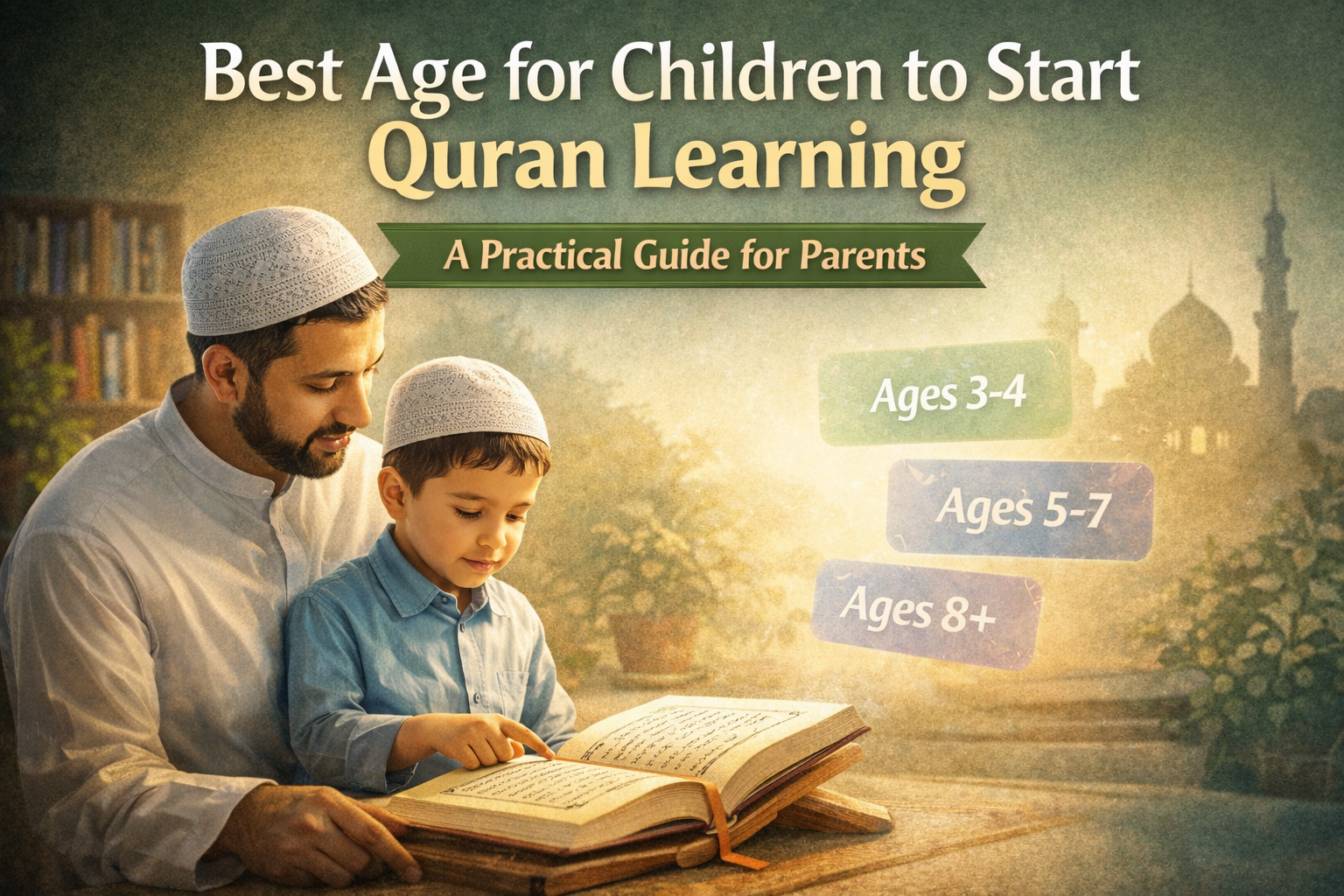
Best Age for Children to Start Quran Learning — A Practical Guide for Parents
Many parents ask: “When is the right age to begin my child’s Quran learning?” The short answer: there is no single perfect age. What matters most is the child’s readiness, a gentle method, and a consistent, loving environment. This guide helps you decide when to start and how to build a joyful, effective Quran routine for children.
Why age is less important than readiness
Every child is different. Some children respond beautifully to listening and repeating at 3–4 years old, while others are more ready for structured lessons at 5–7 years. Two practical factors usually matter more than the numeric age:
- Attention span: Can the child sit for 8–15 minutes with calm focus?
- Parental support: Are parents able to join short sessions, provide encouragement, and keep practice consistent?
Suggested age-based approach (practical)
Ages 3–4: Early exposure (listening & love)
- Goal: Build fondness for the Quran through listening and short repetition.
- Method: Play simple surahs during playtime, use short rhythmic repetition, and read aloud while the child follows with finger pointing.
- Session length: 5–10 minutes, several short sessions per week.
Ages 5–7: Formal beginnings (reading basics)
- Goal: Begin basic reading, short surahs, and simple tajweed rules.
- Method: Short focused lessons (10–20 minutes), letter recognition games, and memorizing short surahs like Al-Fatiha and Al-Ikhlas.
- Session length: 10–20 minutes daily or 3–5 shorter sessions weekly.
Ages 8+: Structured learning (reading & memorization)
- Goal: Build fluent reading, longer memorization, and tajweed foundations.
- Method: Regular classes with a qualified teacher, short home practice, and gradual memorization plans.
- Session length: 20–40 minutes per day, with clear revision routines.
Signs your child is ready to start
- Can sit calmly for 8–15 minutes.
- Shows curiosity when you recite or read the Quran.
- Remembers short rhymes or phrases easily.
- Repeats after a teacher or parent with interest.
Methods that work well for children
- Short, joyful sessions: Keep lessons short and positive — learning should be a pleasant habit, not a chore.
- Playful repetition: Use songs, clapping, and gentle games to reinforce short surahs.
- Positive reinforcement: Praise, stickers, and small milestones keep motivation high.
- Modeling: Children imitate parents — recite regularly at home and invite them to listen.
- Consistent routine: A regular daily or near-daily time is more effective than long irregular sessions.
Want a Child-Friendly Quran Plan?
Book a free consultation with our experienced child-friendly Quran teachers — we’ll suggest a short, personalized learning plan based on your child’s age and readiness.
Book a Free ConsultationPractical sample routines (age-specific)
Sample for ages 3–4
- Daily: 5–10 minutes of listening to short surahs with parent interaction.
- Weekly: 1 longer session of 10–15 minutes introducing a new short surah through play.
Sample for ages 5–7
- Daily: 10–15 minutes — short letter games, repeat a few ayahs.
- Weekly: 2–3 small practice sessions with a teacher; weekly review at home.
Sample for ages 8+
- Daily: 20–30 minutes focused on reading, short memorization, and simple tajweed corrections.
- Weekly: teacher check-in and longer revision session.
Tools & tips for parents
- Use audio: Choose a clear, child-friendly reciter to model proper pronunciation.
- Keep a notebook: Track small milestones (first surah memorized, fluent recitation of a verse).
- Record progress: Short audio recordings of the child help teachers correct small errors without stress.
- Make practice part of routine: After salah, before playtime, or after a short rest — find a predictable moment each day.
Dealing with setbacks
If a child resists or forgets, reduce session length, return to very small portions, and focus on praise. Avoid pressure; patience and consistency win in the long term.
When to consider a teacher or online class
Consider enrolling in child-friendly lessons if:
- You want structured, progressive steps for reading and memorization.
- You need regular corrections in tajweed and pronunciation.
- You prefer accountability and a scheduled check-in each week.
For a balanced Hifz foundation, parents can pair home practice with short weekly teacher sessions. Learn more about daily memorization plans in our guide: How Much Quran Should I Memorize Per Day?.
Internal resources & links
- How to Start Memorizing the Quran Step by Step — foundational Hifz method for learners of all ages.
- Common Hifz Mistakes Beginners Make — avoid common errors as your child progresses.
- Best Time of Day to Memorize the Quran — choose the ideal session time for your child.
FAQ (Parents)
- Q: Is 3 years old too early to start?
- A: Not for exposure—short listening and joyful repetition are helpful. Formal lessons often work better around 5–7 years, depending on readiness.
- Q: How often should my child practice?
- A: Short daily practice (10–15 minutes for young children) or multiple short sessions per week keeps progress steady without pressure.
- Q: Should parents teach tajweed or leave it to teachers?
- A: Parents can model correct recitation and encourage practice; qualified teachers should correct tajweed and pronunciation when the child is ready for structured lessons.
Final note: Start when your child shows readiness and keep sessions short, loving, and consistent. With support from parents and qualified teachers, children can develop a lifelong connection to the Quran.
Ready to Start Your Child’s Quran Journey?
Book a free consultation with our child-friendly Quran teachers and receive a short, personalized plan to begin gently and confidently.
Book a Free Consultation