
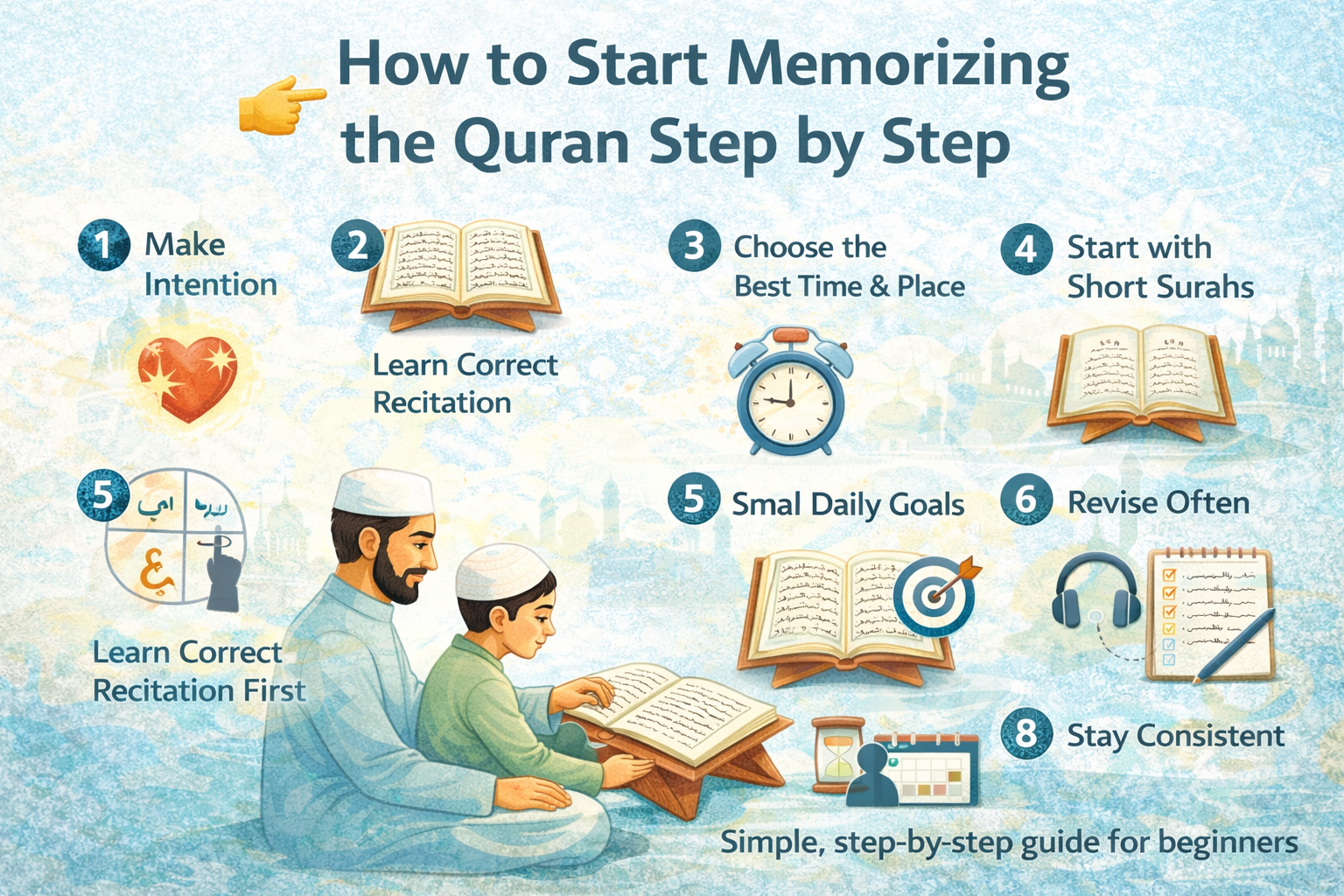
How to Start Memorizing the Quran Step by Step
Many Muslims wish to memorize the Quran but feel unsure about how to begin. Some worry they are too old, others feel they do not have enough time, and many parents wonder how to help their children start correctly.
Memorizing the Quran is not about speed or pressure. It is a journey that needs sincerity, patience, and simple daily effort. This guide explains how to start memorizing the Quran step by step, clearly and practically, suitable for beginners, parents, and non-native English speakers.
What Does It Mean to Memorize the Quran?
Memorizing the Quran means learning the words of Allah by heart so they can be recited without looking at the Mushaf. Some people memorize the entire Quran, while others memorize selected surahs. Both are valuable and rewarded.
Quran memorization is:
A spiritual journey
A daily habit
A long-term commitment
There is no single path for everyone. Each person memorizes according to their ability and circumstances.
Step One: Make a Sincere Intention
Before starting, pause and make a sincere intention in your heart to memorize the Quran for the sake of Allah.
Your intention does not need to be spoken out loud. A simple, honest intention is enough. Renew this intention whenever you feel tired or slow.
Avoid comparing yourself with others. Every memorization journey is unique.
Step Two: Learn Correct Recitation First
Correct recitation is the foundation of strong memorization. Memorizing without proper pronunciation can create mistakes that are difficult to fix later.
Learning basic Tajweed helps you:
Pronounce Arabic letters correctly
Avoid changing meanings
Memorize with confidence
Beginners and non-Arabic speakers benefit greatly from learning with a qualified teacher.
Step Three: Choose the Right Time and Place
Consistency is more important than long study hours.
Choose:
A quiet place
A fixed daily time
A comfortable and distraction-free environment
Many students find early morning or evening time helpful, but any consistent time is acceptable.
Step Four: Start with Short and Familiar Surahs
Starting small builds confidence and prevents frustration.
Good starting points include:
Surah Al-Fatihah
Short surahs from Juz Amma
Surahs already used in daily prayers
These surahs are easier to repeat and revise regularly.
Step Five: Use a Simple Memorization Method
Avoid memorizing too much at once.
A simple and effective method:
Read one ayah several times while looking
Recite it without looking
Repeat until smooth
Move to the next ayah
Connect the new ayah with the previous one
For beginners, memorizing one to three ayahs per day is often enough.
Step Six: Revise Every Day Without Exception
Revision is essential. Without revision, memorization becomes weak and is easily forgotten.
Helpful revision habits:
Revise yesterday’s memorization daily
Revise older lessons weekly
Recite memorized verses during salah
Many teachers say that revision is more important than new memorization.
Step Seven: Listen to the Quran Regularly
Listening supports memorization, especially for non-native Arabic speakers.
Benefits of listening include:
Better pronunciation
Stronger familiarity with ayahs
Natural correction of mistakes
Choose one reciter and listen consistently, even during daily activities.
Step Eight: Be Patient and Consistent
Some days will feel easy, and other days will feel difficult. This is normal.
Remember:
Everyone forgets sometimes
Progress may be slow but steady
Consistency brings results
If you miss a day, do not quit. Simply continue the next day.
Step Nine: Learn with a Qualified Teacher
A teacher provides:
Correction of mistakes
Proper pacing
Motivation and accountability
Many families choose online Quran learning because it offers flexible schedules and access to qualified teachers worldwide.
Step Ten: Make Dua and Seek Allah’s Help
Always ask Allah to make memorization easy and beneficial.
Simple habits that help:
Make dua before studying
Ask Allah for consistency
Thank Allah for every small success
Memorizing the Quran is a blessing that requires divine help.
A Simple Weekly Memorization Plan
Daily (20–30 minutes):
10 minutes revision
10 minutes of new memorization
5 minutes listening
5 minutes of reciting in prayer
Weekly:
One day focused only on revision
Recite to a teacher or parent
This plan works well for both adults and children.
Common Mistakes to Avoid
Memorizing without correct pronunciation
Taking long breaks
Trying to memorize too much
Ignoring revision
Comparing progress with others
Avoiding these mistakes makes the journey easier and more enjoyable.
Frequently Asked Questions
Is there a best age to start memorizing the Quran?
There is no fixed age. Children, adults, and even elderly learners can successfully memorize the Quran with patience and consistency.
How long does it take to memorize the Quran?
It depends on time, consistency, and revision. Some take a few years, others longer. Steady progress matters more than speed.
Can non-Arabic speakers memorize the Quran?
Yes. Many non-Arabic speakers memorize the Quran successfully. Learning meanings later is highly encouraged.
How much Quran should a beginner memorize daily?
Beginners can start with one to three ayahs per day. Small, consistent steps lead to strong memorization.
Is online Quran learning effective?
Yes. With qualified teachers and regular lessons, online Quran learning is very effective for beginners and children.
Final Encouragement
Starting to memorize the Quran is a noble decision. Begin with small steps, correct guidance, and a sincere heart. Every ayah memorized is a light and a blessing.
If you or your child would like guided support, structured lessons, and qualified teachers, you are welcome to learn Quran online or book a free trial class to begin this blessed journey with confidence.