
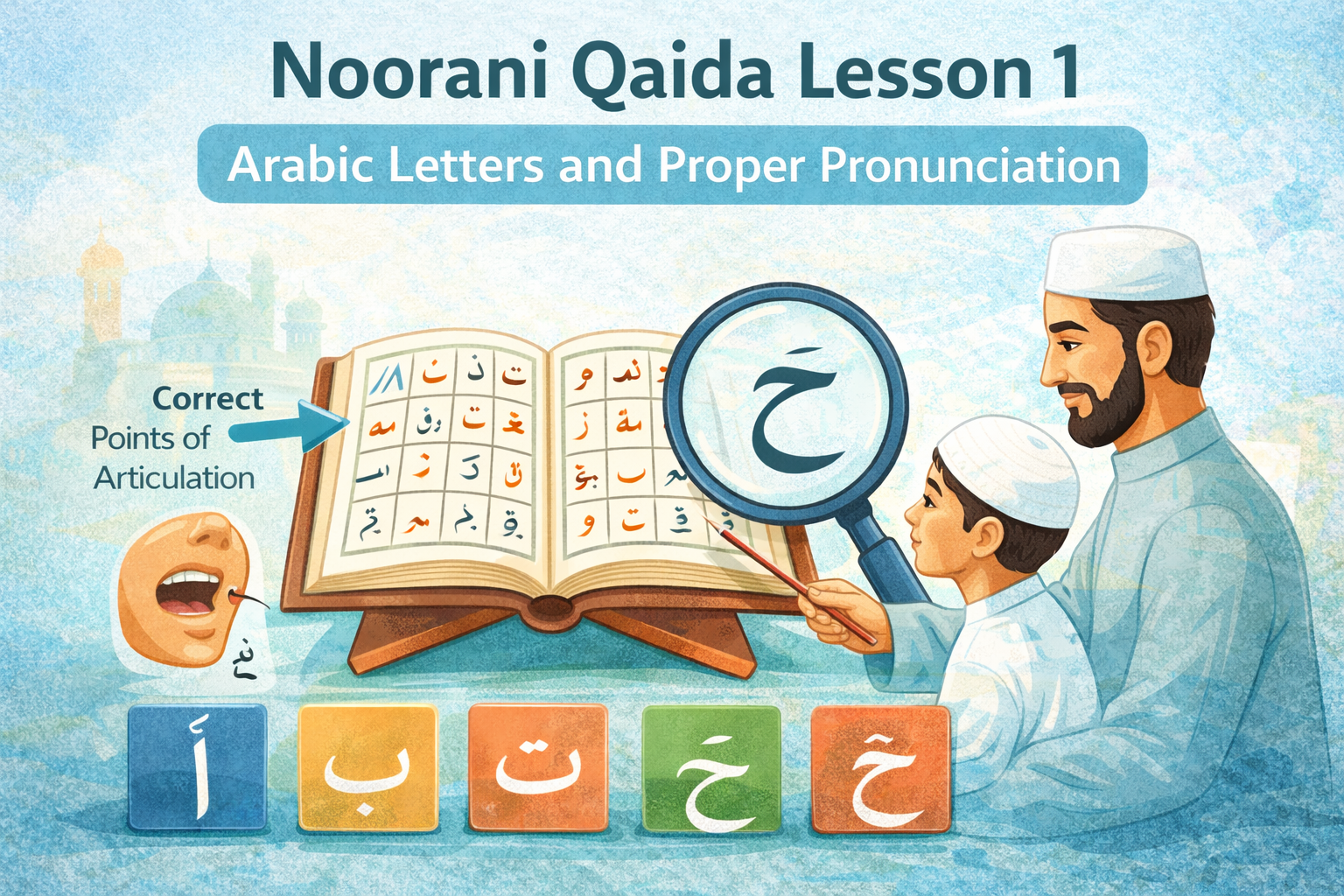
Noorani Qaida Lesson 1: Arabic Letters and Proper Pronunciation
Learning to read the Quran correctly begins with mastering the Arabic letters and their proper pronunciation, and this is exactly what Noorani Qaida Lesson 1 focuses on. Whether the learner is a child, an adult, or a complete beginner, this lesson lays the foundation for accurate Quran reading and confident progress.
The Noorani Qaida method is widely used around the world because it introduces Quranic reading in a clear, gradual, and structured way. Lesson 1 helps students recognize Arabic letters clearly and pronounce them from their correct points of articulation (Makharij), which is essential before moving on to joining letters or reading words.
Understanding Arabic Letters
Arabic has 29 letters, each with a unique shape and sound. In Noorani Qaida Lesson 1, students are introduced to these letters individually, without vowels or combinations. This helps learners focus fully on recognizing the letter form and producing its correct sound.
Unlike some languages, Arabic letters may change shape depending on their position in a word. However, in this first lesson, students learn the basic standalone form of each letter, making it easier to recognize them later in different positions.
Importance of Proper Pronunciation (Makharij)
Correct pronunciation is a key goal of Noorani Qaida. Every Arabic letter originates from a specific place in the mouth, throat, tongue, or lips. This is known as Makharij al-Huroof.
In Lesson 1, students begin learning:
Throat letters such as أ، هـ
Tongue letters such as ب، ت
Lip letters such as م، ف
Pronouncing each letter correctly from its proper place ensures that Quran recitation is accurate and respectful of the words of Allah. Small pronunciation errors can change meanings, which is why this foundation is so important.
Learning Without Vowels (Harakat)
One unique feature of Noorani Qaida Lesson 1 is that letters are taught without harakat (fatha, kasra, dhamma). This may feel challenging at first, but it strengthens the student’s ability to recognize letters independently.
By mastering letters without vowels, students:
Build strong visual recognition
Avoid guessing sounds
Prepare effectively for reading joined letters later
This step-by-step approach prevents confusion and improves long-term reading accuracy.
How Online Noorani Qaida Classes Help
In online Noorani Qaida classes, a qualified teacher listens carefully to each student’s pronunciation and corrects mistakes immediately. One-to-one online lessons are especially effective because the teacher can adjust the pace and focus on the learner’s specific needs.
At Quran Reading Center, Noorani Qaida lessons are taught using:
Clear visual materials
Repetition and guided practice
Patient correction and encouragement
This makes learning comfortable, even for very young students or adult beginners.
Practice Tips for Lesson 1
To make the most of Noorani Qaida Lesson 1:
Practice daily, even if only for 10–15 minutes
Repeat each letter aloud several times
Listen carefully to your teacher’s pronunciation
Avoid rushing to the next lesson until the letters are clear
Consistency is more important than speed at this stage.
Moving Forward
Noorani Qaida Lesson 1 is the first step toward fluent Quran reading with Tajweed. Once students master Arabic letters and proper pronunciation, they can confidently move on to joining letters, reading words, and eventually reciting the Quran smoothly.
If you are ready to begin or want your child to start Quran reading the right way, online Noorani Qaida classes provide a structured, supportive, and effective learning experience.