
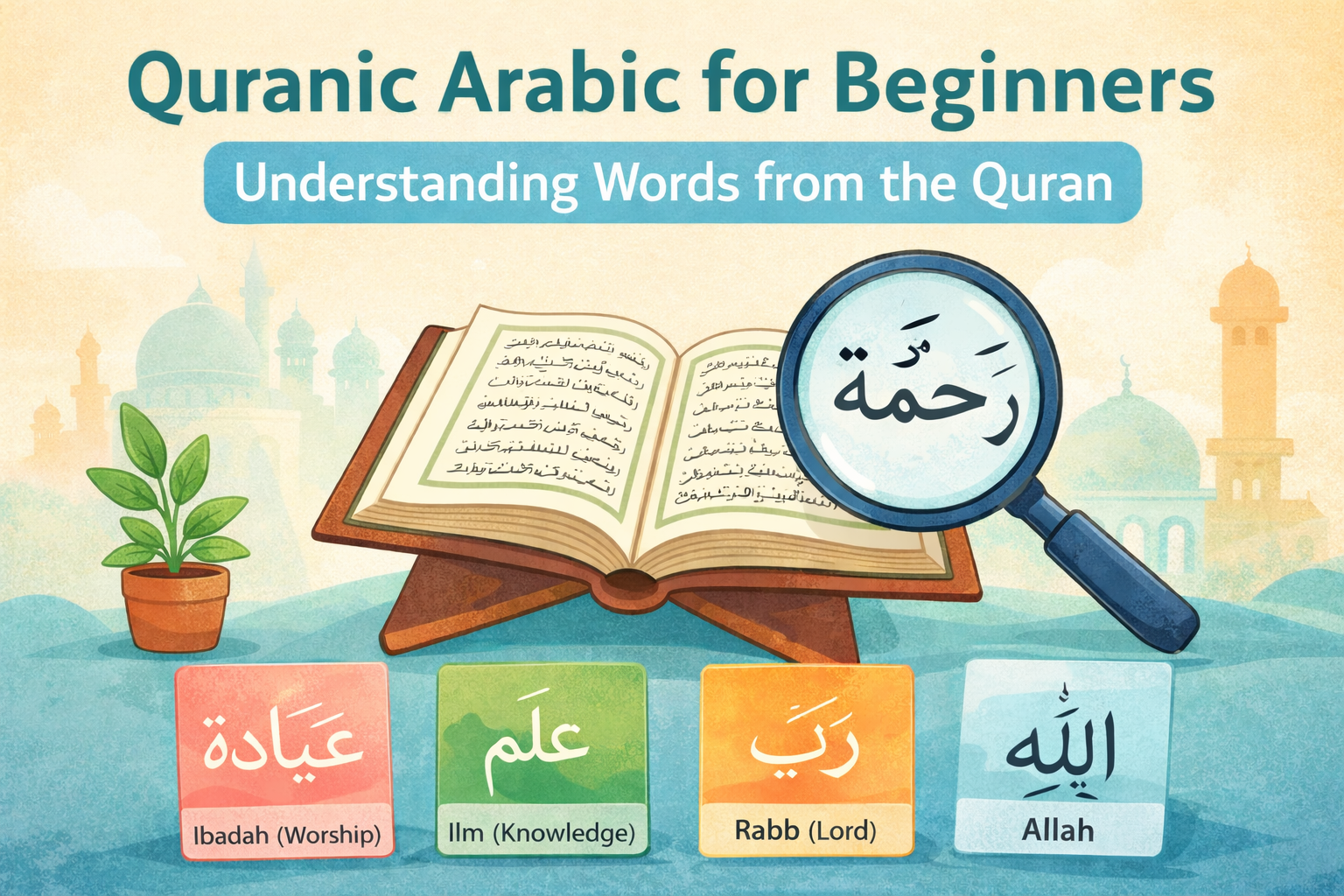
Quranic Arabic for Beginners: Understanding Words from the Quran
Learning Quranic Arabic is an important step for anyone who wants to understand the Quran beyond recitation. While translations help, they cannot fully convey the depth, precision, and beauty of Allah’s words. By learning Quranic Arabic, beginners can connect directly with the meanings of verses and develop a stronger relationship with the Quran.
Why Learn Quranic Arabic?
Quranic Arabic is different from modern spoken Arabic. It focuses on the vocabulary, sentence structures, and expressions used in the Quran. Learning these basics helps students:
Understand commonly repeated Quranic words
Recognize patterns in verses
Reflect more deeply during recitation and prayer
Even learning a small number of words can unlock the meaning of many verses, because the Quran uses a limited core vocabulary that appears repeatedly.
Starting with Common Quranic Words
For beginners, the best way to start Quranic Arabic is by learning frequently used words. Words such as Allah, Rabb, Rahmah, Ilm, and Ibadah appear many times throughout the Quran. When students recognize these words, they begin to understand verses naturally without relying fully on translations.
A good beginner approach is:
Learn 5–10 Quranic words per lesson
See how each word appears in different verses
Practice recognizing the word during recitation
This method builds confidence and motivation very quickly.
Understanding Simple Sentence Structure
Quranic Arabic sentences often follow clear and repeated patterns. Beginners do not need to study complex grammar at the beginning. Instead, they should focus on:
Who is being spoken about
What action is happening
To whom or for what purpose
By understanding basic sentence structure, students can grasp the general meaning of many verses even with limited vocabulary.
Learning with Guided Lessons
Studying Quranic Arabic with a qualified teacher makes the process much easier and more effective. A structured program ensures that lessons progress step by step, without confusion or overload. Teachers explain meanings clearly, give examples from the Quran, and help students apply what they learn in real recitation.
Online Quranic Arabic classes are especially helpful because they offer:
One-to-one learning
Flexible schedules
Personalized pacing
Regular revision and practice
Building a Strong Connection with the Quran
The goal of learning Quranic Arabic is not just language knowledge, but understanding and reflection. When students understand the words of the Quran, their prayers become more meaningful, and their recitation becomes more heartfelt.
With consistent study, patience, and proper guidance, beginners can gradually move from recognizing words to understanding full verses — and experience the Quran in a deeper and more personal way.